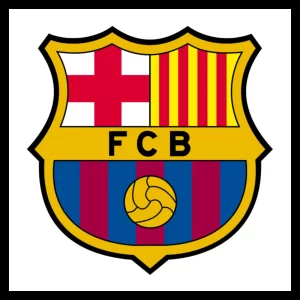

This identity is often called “més que un club”, which means more than just a club. These represent the club’s participation in Catalan culture over the years.
The badge blends symbols of faith, region and sport into one design.
The badge has barely changed in a hundred years, unlike most modern football crests.
Barcelona’s football has always leaned more towards expression than brute force. It reflects the energy of players with its clean lines, bold colours and a badge full of meaning. This makes every jersey feel part of something bigger than a match result.
Football kits change with the times, and Barcelona’s shirts are no exception.
In the early 1900s, players wore simple cotton stripes with no logos or sponsors. Shirts were heavy and plain. Football back then was about grit and community spirit, not branding.
The late 1980s and early 1990s sort of brought a shift in style and substance, you know. Johan Cruyff’s “Dream Team” played this fluid kind of forward-pressure football, and their Meyba jerseys had bold collars and sharp geometric motifs to match the whole vibe.
Then Kappa came in during the 1990s; they sort of introduced tighter, athletic cuts that matched how the game was getting faster. So the kits went from pretty plain and practical into something more expressive within just one generation, and it really shows.
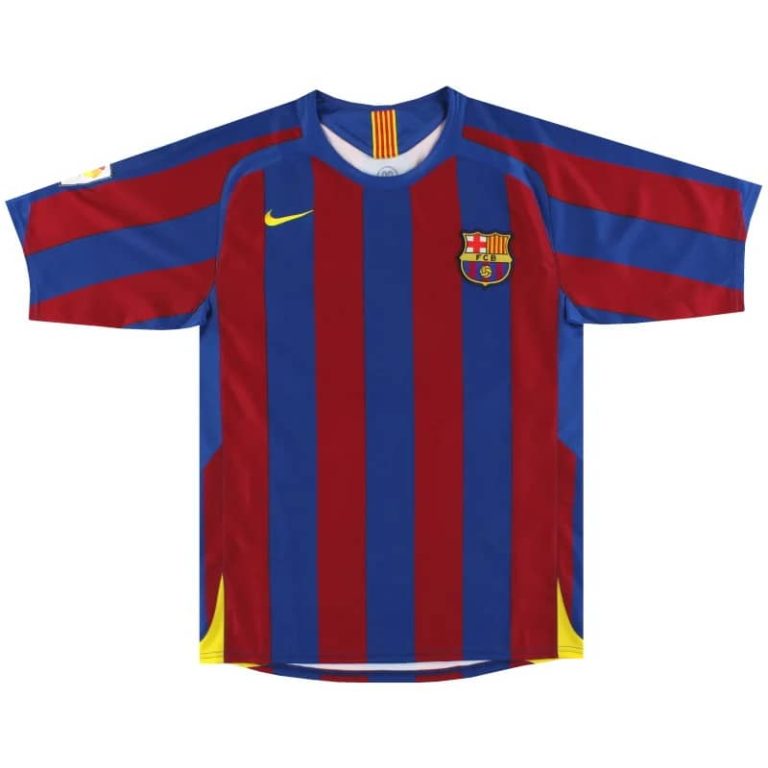
Since 1998, Nike has produced Barcelona’s kits, blending performance fabric with design details that nod to the city and its culture.
| Era | Manufacturer | Style Focus |
|---|---|---|
| 1900s–1970s | Local tailors | Plain cotton, no branding |
| 1980s–1990s | Meyba | Bold collars, geometric patterns |
| 1990s | Kappa | Tighter, athletic fit |
| 1998–present | Nike | Performance fabric, cultural detail |
Some shirts stick in the memory long after the final whistle.
Worn as Barcelona lifted their first European title under Cruyff, this shirt marked the moment Barcelona’s manner of play finally earned the biggest prize in club football. It was as if every small detail had been added up, and then suddenly they reached the very top.
Barcelona took La Liga, the Copa del Rey and the Champions League under Pep Guardiola. The kit from that run is linked to one of the most dominant seasons any club has ever had, really.
A shirt becomes iconic, mostly through the player who wears it, but also because of the design. It’s like the fabric intention and the person together, and then suddenly it feels well known.
Cruyff’s number 14 kind of broke convention back then when the strikers were usually stuck with 9, and the defenders took lower numbers, like that was the whole rule. His pick showed a clear refusal to be boxed in, both as a player and also as a thinker about football.
Ronaldinho’s shirt became a symbol of joy, worn by a player who treated football like street play. Kids around the world wanted that shirt because they wanted to play like him.
Messi’s number 10 has kind of become one of the most instantly recognised sporting shirts across the planet. These jerseys with his name and that number also seem to matter, whether we’re talking about his breakthrough years or those last seasons when he was nearing the end of his time at the club.
Their jerseys weren’t about individual flash. They stood for a footballing philosophy built on passing, movement and trust in teammates.
The home with this jersey has stayed loyal to its blaugrana stripes for most of the club’s history, though the width and shade of those stripes have shifted from decade to decade.
Away jerseys give designers more room to play.
These kits often kind of challenge convention. Antoni Gaudí’s work has inspired a few designs, and somehow it ties the shirt back to the city’s cultural heritage, not just football tradition.
Certain jerseys go beyond popularity and become genuine fan favourites, the kind supporters actively seek even years after their release.
These t-shirts are not just attention seekers; they represent the love of fans and then the hard work of players. That’s why it is very popular between fans.
Retro reissues of classic designs tend to sell well because fans want a slice of a particular time, not merely some generic tee with the badge on it. It’s like they’re chasing a vibe, an exact mood, not only the logo.
The bold orange away kit from the mid-2000s and the striking yellow shirts from different decades have both kind of built loyal fan bases. This shows that supporters don’t always want the safe option.
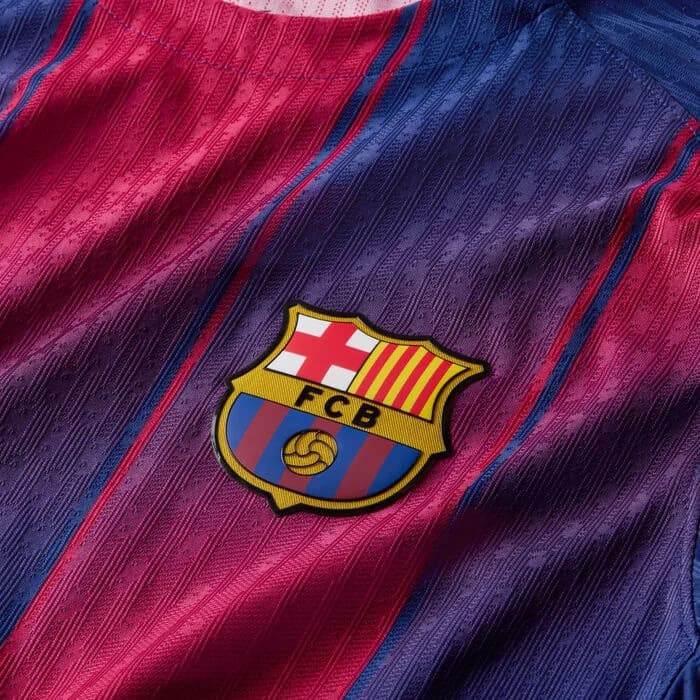
A few design choices set the Barcelona jersey apart from other football shirts.
Those vertical stripes are quickly recognisable, even from far away. Not many clubs have kept a single visual concept for as long as Barcelona has, with its blue-grey streaks.
UNICEF showed up on the shirt back in 2006, not exactly as a paid sponsor but more like a charitable partnership, you know, the kind that still lets the team keep its identity. Later on, sponsors such as Qatar Airways and Spotify each came with their own colour scheme, sort of adding fresh chapters while making sure the earlier parts stay in place.
Modern football demands more from a shirt than good looks.
Today’s jerseys use moisture-wicking fabric to keep the players cool and dry during matches, kind of. It’s lighter, so there’s less drag, and that helps them move more easily at the very top of competitive football.
Some more modern shirts use recycled polyester, made from reused plastic bottles, so it’s kind of recycling directly. This change also mirrors the broader stuff football clubs are thinking about, like responsibility not just on the pitch, but sort of in every other corner too.
Football shirts have moved well beyond the stadium recently, and the jersey sits at the centre of that trend.
Musicians, actors and influencers have all been spotted wearing Barcelona shirts, pushing the jersey into fashion circles that have nothing to do with sport.
People wear old kits to connect with childhood memories, favourite players or specific seasons. A shirt from the Cruyff or Messi era carries emotional value that goes beyond how it looks on a hanger.
Collectors chasing these jerseys usually look for a handful of standout editions.
| Jersey | Season/Era | Why It Matters |
|---|---|---|
| European Cup Final Shirt | 1992 | Cruyff’s Dream Team, first European title |
| Treble Season Shirt | 2008–09 | Guardiola’s historic three-trophy campaign |
| Ronaldinho Peak Shirt | 2005–06 | Ballon d’Or-winning season |
| Messi Breakthrough Shirt | Early 2000s | Start of a two-decade legacy |
| Match-Worn Shirts | Various | Direct link to specific games |
El Clásico brings out strong emotions, and certain Barcelona jerseys are forever tied to famous results against Real Madrid.
The shirt worn during the 5-0 win at Camp Nou stands out, a match many consider one of Guardiola’s finest tactical performances.
The 6-2 away win at the Bernabéu also produced a jersey fans still talk about, linked directly to a night when Barcelona’s style of play dramatically beat their fiercest rivals.
Young fans often fall in love with football through a shirt before they fully understand the tactics or history behind a club.
This connection often shapes how new fans see football itself, building an appreciation for technique and teamwork.
Care for a jersey collection requires some attention.
Wash shirts inside out, using cold water and a gentle cycle, to protect printed numbers, badges, and sponsor logos from cracking or fading. Avoid tumble drying, since heat damages fabric and printed details.
For fans wanting to build their own collection, a wide range of these jerseys covers everything from vintage classics to the latest releases. Options include home, away and third kits from different eras, along with reissues inspired by historic seasons and famous players. Whether the goal is finding a shirt from Cruyff’s Dream Team era, a Ronaldinho-inspired design or a modern release, there’s a jersey for every kind of fan.
Football shirts fade and stretch, and teams swap them out, but somehow certain designs just stay in our heads long after the final whistle blows. That’s kind of the true magic behind a Barcelona jersey; it sort of locks in little moments, players, and entire seasons that shaped the club.
No matter if it’s a shirt from Cruyff’s Dream Team or one worn during Messi’s brightest years, every design seems to carry a style made of motion, patience, and proper skill. For fans, owning one of these shirts means keeping a small piece of that narrative, a little spark that reminds us why this club has always stood for more than just points on a board.