
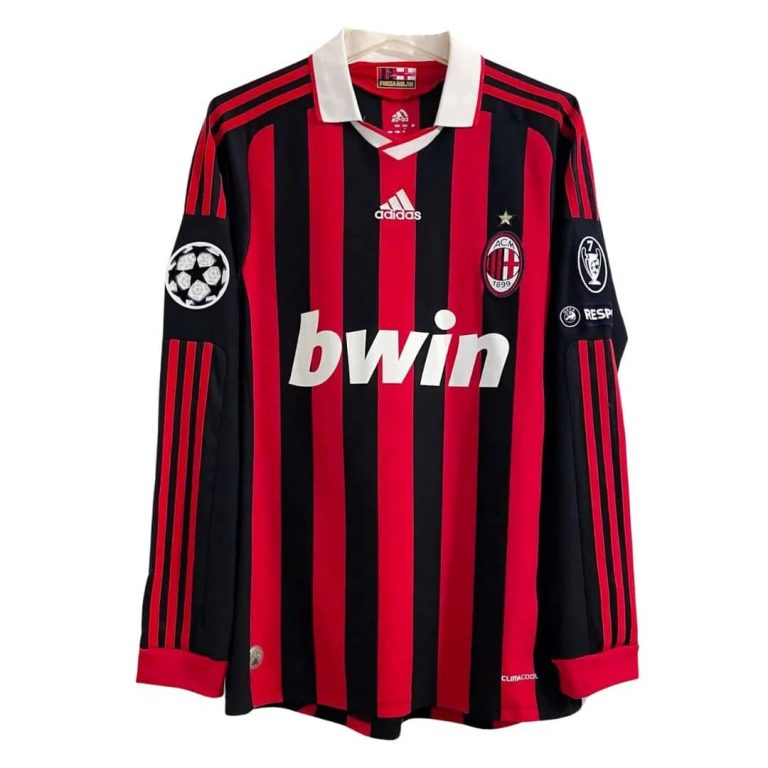
It was founded in 1899; the club chose these colours, with some meaning behind its red colour, which represents the fire and passion of every player, and its black colour stands for the fear of the moment they step onto the pitch.
That colour pairing has barely changed in over a hundred years. Clubs constantly swap their branding, but Milan held onto what worked. The stripes turned into a symbol before they ever became a habit, and that’s rare in football.
Early shirts stayed simple. No sponsors, no fancy fabric, just wool and stripes. But even then, fans felt what those colours meant to them.
What the Colours Represent
These jerseys have journeyed through several clear stages since the club began. Each era brought its own fabric, fit, and finish.
| Era | Key Feature | Notable Shift |
|---|---|---|
| 1899–1950s | Basic wool shirts | Thick stripes, no branding |
| 1960s | Clean crew neck | Simple, minimal design |
| 1980s | Sponsor logos land. | Mediolanum branding steps in. |
| 1990s | Technical fabrics begin. | Lighter materials tested |
| 2000s | Sharper fits | Champions League-era shirts |
| 2010s | Slimmer stripes | Modern collar styles |
| 2020s | Performance focus | Lightweight, breathable builds |
Each decade tossed in something fresh, but the heart of it, red and black stripes, never drifted away.
The home jersey has always been the one that fans feel most strongly about. It’s the shirt that struts out at the San Siro, in front of the fans who show up every single week.
In the early years, the stripes sat thick, and the shirt hung heavy. As the decades rolled by, makers started caring about fit and movement. By the 2000s and 2010s, home kits began echoing big moments in the club’s story.
How the Home Kit Changed
These jerseys give designers the freedom to create more stylish designs, and one of the Milan teams has taken full advantage of this opportunity over the years.
White has shown up as a top pick for away kits, with red or black accents quite often, so the Milan mood stays switched on. The 1988-89 European Cup-winning group actually pushed through a lot of that memorable run in a mostly white kit, and that kind of hints just how far back the away-club-thing lineage goes.
Away jerseys are also where you usually catch the sharpest fashion swings. They are less tied up with tradition, so they often copy whatever design trend is in charge right now.
It’s the stage where things get a little more lively. So, now it doesn’t carry the same weight of tradition, so designers can play and experiment more freely.
Recent third kits have leapt into bold colours and unusual patterns, things you’d never spot on a home shirt. Special edition shirts, like the 1999 centenary jersey, are sprinkled with gold detailing to mark big anniversaries.
These kits give fans something different to toss into their collection. They don’t aim to replace the home or away shirt in your heart, but they do give the club room to try fresh ideas.
Over the years, several big names have crafted the AC Milan jersey. Each maker stamped its own touch on the design, while keeping the red and black spirit front and centre.
They design these with deep detailing that fans cannot notice at first glance. Designers’ focus on fabric stitching quality and logo placement all hinge on whoever holds the deal at the time.
What Manufacturers Bring to the Shirt
Each manufacturer swap tends to spark a small style shift too. Fans often spot a slightly different fit or a fresh take on the collar when a new supplier steps in.
Sponsors haven’t just covered the costs; they’ve kind of slipped into the shirt’s whole narrative. Mediolanum sat on the shirt during that well-known 1988-89 European Cup win, and now that logo links up with one of the club’s greatest seasons.
| Sponsor | Era | Tied to |
|---|---|---|
| Mediolanum | 1980s | 1988-89 European Cup win |
| Opel | Late 1990s–2000s | Champions League success |
| Fly Emirates | 2010s onwards | Global fanbase growth |
Fans hold mixed feelings about sponsor logos. Some prefer the cleaner look of the early shirts, without a name splashed across the chest. Others see the sponsor as part of the shirt’s story, a marker of a particular season or era.
Some shirts kind of stick in memory, not just because of the fabric but also because of the players who wore them. Paolo Maldini spent his entire career draped in Milan’s colours, and his No. 3 jersey is, honestly, one of the most respected bits in football history.
Marco van Basten had this sort of sly magic, you know; his goals and that flair he had made whatever jersey he put on feel kind of special. Later, Zlatan Ibrahimović showed up with his bit of the tale, and he pulled in a newer, louder wave of supporters for that shirt.
These players didn’t only wear the jersey; they poured meaning right into it, like it was everyday craftsmanship. And sure, fans don’t just snatch a shirt because there’s a name on the back. They grab a piece of the player’s story as well, somehow.
Certain shirts are forever linked to the moments that unfolded while players wore them. The 1988-89 European Cup kit stands out as one of the most talked about, tied to a season that flipped the club’s direction under Arrigo Sacchi.
Shirts Tied to Big Moments
Shirts from these moments carry extra value, both in price and in feeling. Owning one feels like holding a small piece of the match itself.
Football fashion races along fast, and Milan’s shirts have kept pace. Thick stripes thinned out over time. Crew necks morphed into V-necks, then swung back again. Sponsor logos shrank from bold and loud to small and subtle, then settled somewhere in between.
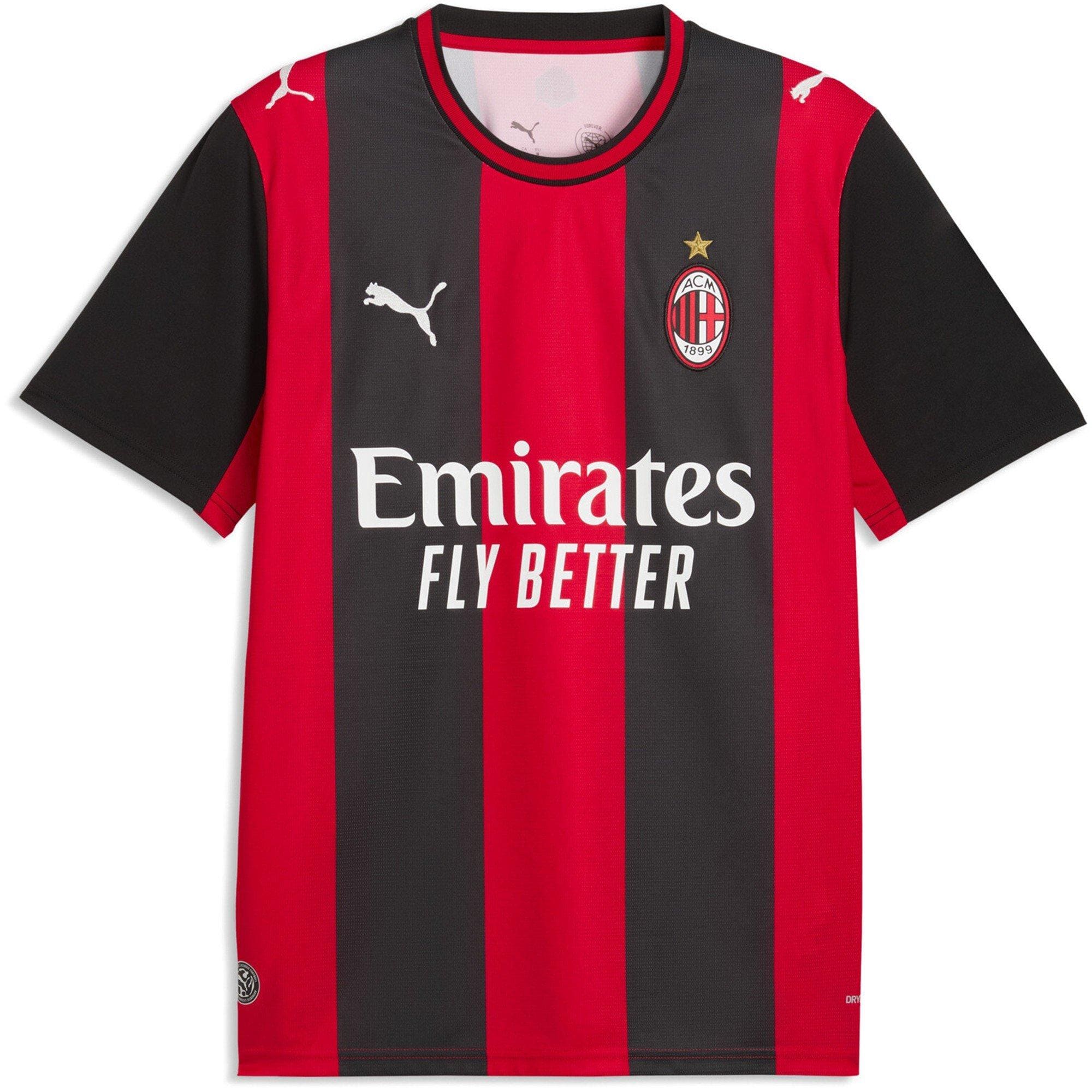
Materials shifted too. Wool gave way to cotton blends, then to synthetic performance fabrics built for speed and airflow. Fit changed as well; older shirts hung baggy, while modern kits hugged the body close.
Even the stripe width has swung season to season, sometimes thick and bold, other times slim and quiet. It’s a small detail, but it’s one collectors and fans track closely.
These t-shirts are more than just something to wear or look at. Designer focus on design latest kit with moisture-wicking fabric to keep players dry and cool during matches.
Features Built Into Modern Kits
None of this steals away from the classic look. The stripes still stand, the colours still echo the club’s history, but underneath, a lot more science hums than the old wool shirts ever did.
Some shirts hold a special spot with collectors. The 1988-89 European Cup-winning kit tops most lists, thanks to its history and its simple, striking design. The 1999 centenary shirt ranks as another favourite, prized for its limited run and gold detailing.
More recent shirts, like the 2022-23 kit, have also grabbed collector attention, blending bold stripes with a modern finish that feels both fresh and familiar. Shirts tied to specific players, especially those worn by Maldini, van Basten, or Ibrahimović, tend to hold their value and pull interest over time.
Something about owning an AC Milan jersey reaches beyond fashion. For many fans, it’s about holding onto a memory, a season, a player, or a moment that mattered to them.
Collecting also links fans to the club’s wider history. Each shirt tells part of the Milan story, from the early wool kits to today’s high-tech designs.
A community spirit lives in it too. Fans swap stories about where they found a particular shirt, what match they wore it to, or which player’s name graces the back.
Demand always pulls in fakes, so it’s kind of helpful to know what you should watch out for. Real shirts show off neat stitching, firm tags, and the right branding, not just a polished surface. When it’s off, you usually notice it pretty fast.
Signs of a Genuine Shirt
Buying from official club stores or licensed retailers stands as the safest way to dodge a scam. If a deal seems unusually good, especially a large discount on a current-season shirt, it probably is.
The latest collection of these T-shirts is focused on looking fresh with their classic red and black stripes to fit more sharply, and the fabric tech feels a lot more up-to-date. These kits usually provide a neat look with their three different colours, which are a subtle nod back to the club’s roots, kind of like a respectful whisper.
Third kits tend to swing the boldest of the three, giving designers room to try something different each season. Across the whole range, comfort and performance sit alongside the traditional look fans expect.
Even if you don’t cheer for Milan, a good case exists for owning one of their shirts. Few clubs are designed as instantly recognisable as the red and black stripes. It’s a piece of football history you can wear.
These also work as a genuine style piece, on match day or off. The clean lines and bold colours suit casual wear just as well as they do on the pitch.
Great shirts kind of carry stories that run way beyond the pitch, and this one has it more than most. Through wool kits, sponsor reshuffles, and that newer fabric tech thing, the spirit behind the design has never really wavered.
If you own an AC Milan jersey, you kind of get a piece of that long, proud journey, all tied to legends’ triumphs and a colour match that still grabs attention today.
Whether you’re assembling a collection or just picking up your first shirt, this kit has something a bit uncommon: a genuine link to football history that looks sharp on match day as well as when you’re just out, not thinking about it.